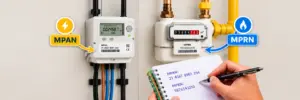
When it comes to business energy, a few numbers matter more than they might seem. Two of the most important are your MPAN and MPRN.
They may look like technical references hidden somewhere on an energy bill, but they play an important role in identifying your electricity and gas supplies. Whether you are switching suppliers, checking your bill, moving into new premises or managing several business sites, knowing these numbers can save time and help avoid unnecessary delays.
With Market-wide Half-Hourly Settlement (MHHS) also changing parts of the electricity market, understanding your MPAN has become even more useful.

DID YOU KNOW?
- MPAN identifies an electricity supply point. Since September 2025, it is 22 characters across two lines.
- MPRN identifies a gas supply point. It is a single number of 6 to 12 digits.
- Neither changes when the supplier does, and neither is the meter serial number.
What is an MPAN?
An MPAN, or Meter Point Administration Number, identifies your electricity supply point. Every electricity connection has its own MPAN.
You may also hear it called a Supply Number or S Number. It is normally shown on your electricity bill and is made up of two parts: a top line containing technical information and a 13-digit bottom line that identifies the supply point.
The MPAN is linked to the electricity supply point at your premises, rather than to your energy supplier. This means it does not change simply because you switch suppliers.
How is an MPAN changing under MHHS?
This is where things get particularly relevant for businesses.
Under MHHS, the format of the MPAN top line is changing from 8 digits to 9 digits. The traditional three-digit Meter Timeswitch Code (MTC) is being replaced by a four-digit Standard Settlement Configuration (SSC) ID. The final three-character field also changes from the Line Loss Factor Class (LLFC) to a DUoS Tariff ID.
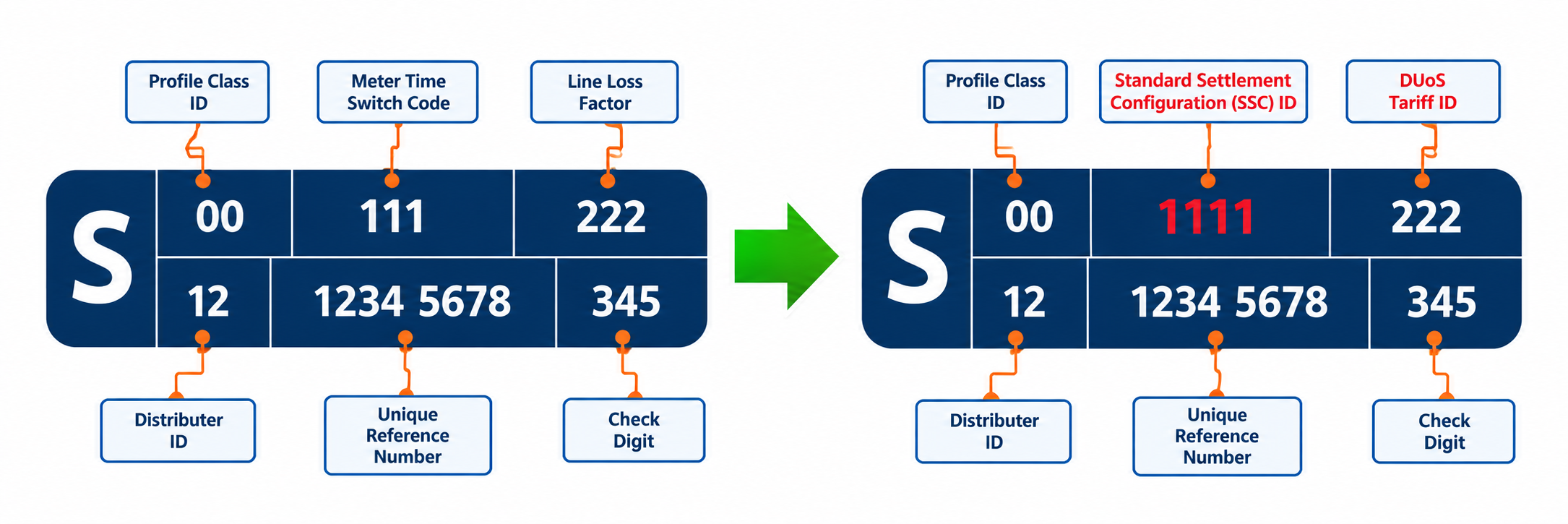
You do not need to request this change yourself. It forms part of the MHHS migration process.
What is an MPRN?
Your MPRN, or Meter Point Reference Number, is the equivalent reference for your gas supply.
Unlike an MPAN, an MPRN is a single number rather than a two-line reference. It is generally between six and twelve digits and identifies the gas supply point serving your premises.
Your MPRN can usually be found on your gas bill. It may also appear as a Gas Supply Number or Meter Point Reference Number.
Where can I find my MPAN and MPRN?
The easiest place to look is your latest energy bill.
For electricity, look for any of the following:
- MPAN
- Supply Number
- Meter Point Administration Number
For gas, look for any of the following:
- MPRN
- Gas Supply Number
- Meter Point Reference Number
It is important not to confuse these numbers with your meter serial number or customer account number. A meter serial number identifies the physical meter, while an MPAN or MPRN identifies the supply point.
Why do MPAN and MPRN numbers matter to businesses?
These references are particularly important when managing your business energy.
You may need them when:
- Switching energy supplier.
- Requesting an energy quotation.
- Checking your current supply details.
- Resolving a billing query.
- Managing a change of occupier.
- Managing several business premises.
For businesses with multiple sites, keeping accurate records of each site’s MPAN, MPRN and meter details can make energy administration much easier. Each premises has its own supply references, so using the wrong number can lead to delays or incorrect information being associated with a site.
Keep your energy details accurate
MPANs and MPRNs may look like strings of numbers, but they connect your business to the correct electricity and gas supply records.
Keeping these details accurate is especially important when you are comparing contracts, switching suppliers, or managing multiple premises. If you are unsure which number relates to your electricity or gas supply, your latest bill is a good place to start.
As the energy market continues to change through MHHS, understanding the information behind your energy bill can help your business stay informed and avoid unnecessary confusion.