Every day, the world’s energy is on the move. It travels by pipeline, by tanker and by ship. It squeezes through channels so narrow that one incident can shake markets on the other side of the planet.
In 2026, one of those channels fell silent.
On 28 February, the United States and Israel began striking targets in Iran. Within days, the Strait of Hormuz, the gateway to the Persian Gulf, was all but closed to the ships that normally use it. Oil and gas markets faced sudden changes. Businesses far from the fighting began to ask what it meant for them.
Britain is a long way from the Gulf. Its energy is not. Behind the headlines lies a simple chain of cause and effect. Understanding it is the first step to planning for what comes next.
Why Does a War Far Away Shake Energy Everywhere?
Energy has no borders. Oil is priced on world markets. Gas now crosses the oceans as liquefied natural gas, or LNG. So, a shortage in one region is felt in all of them.
Iran hit back across the region. It struck Israel, US bases and neighbouring Gulf states. Energy sites were among the targets, according to the House of Commons Library. Oil, fuel and gas markets were thrown into turmoil.
The ripples spread further still. The Gulf is a big exporter of fertiliser, and gas is a key ingredient in making it, as the IEA notes. When one link in the chain breaks, the strain shows up everywhere.
The Strait of Hormuz: The Narrow Gateway to Global Energy
Find the Strait of Hormuz on a map, and it looks tiny. It is a channel between Iran and Oman. It is the sea route out of the Persian Gulf.
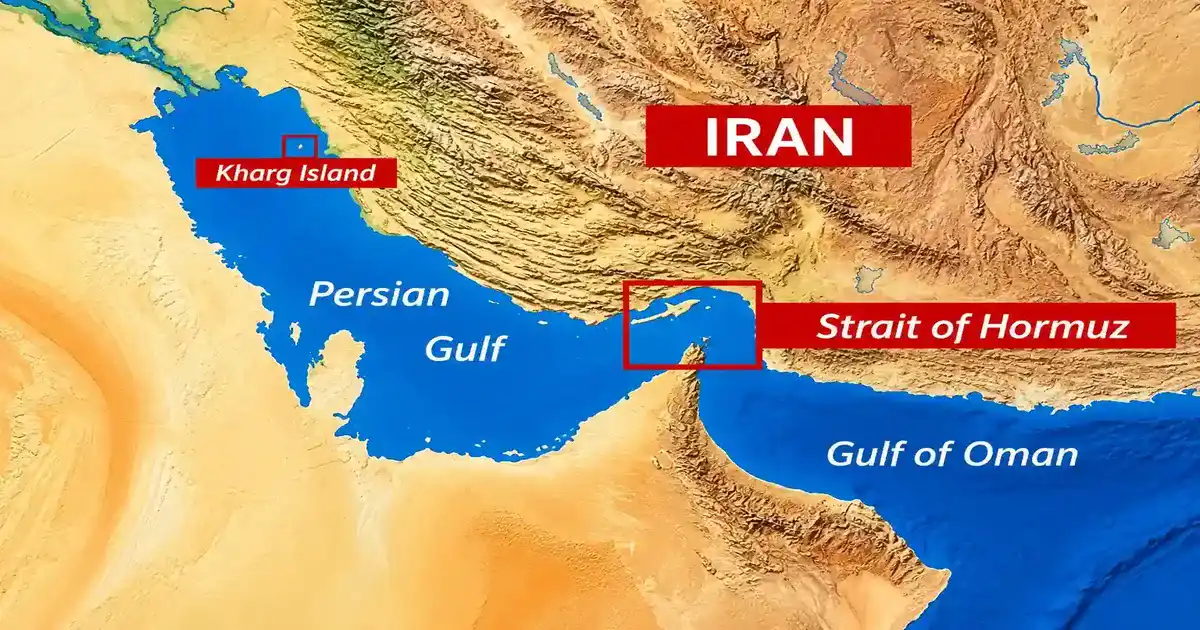
Almost everything the Gulf exports by ship must pass through it. Before the war, that meant around a fifth of the world’s oil. It also meant almost a fifth of its LNG.
Qatar sits behind the strait. It is home to Ras Laffan, the largest LNG facility in the world. When ships stopped, Qatari and Emirati exports fell sharply.
Hope has come and gone. A ceasefire in April was in doubt within a day. In June, the United States and Iran agreed an interim deal to reopen the strait. Tankers came back, but only a fraction of the usual number. By October, attacks on tankers had restarted.
The ship-tracking data settles the argument. Bloomberg reported that LNG shipments in September were the highest since the war began. They were still more than 75% below normal.
Energy Fact: Almost 20% of the world’s LNG supply normally passes through the Strait of Hormuz.
Why Does Britain Feel the Impact of the Middle East Conflict?
Britain buys very little gas from the Gulf. Around 2%, says Energy UK. The country’s gas supply is secure.
But gas is traded on one global market. When Gulf cargoes vanish, buyers bid against each other for what is left. Britain joins the queue and pays the going rate. Put simply, that is why business energy costs are higher today than in February. Cornwall Insight, reported by SmartestEnergy, puts the rise at around a quarter.

DID YOU KNOW?
Only about 2% of Britain’s gas comes from the Gulf. A shortage anywhere is felt everywhere.
The graph below shows how wholesale gas and electricity prices have moved.
UK Electricity Spot
UK Natural Gas
Low Gas Storage Adds to Market Pressure
The Middle East conflict is not the only factor putting pressure on gas markets. Lower gas storage levels across Europe are adding to concerns as the region enters the winter season.
According to Gas Infrastructure Europe (GIE), EU underground gas storage was around 72% full on 1 October 2026, approximately 11% below the level recorded at the same time last year. The European Union Agency for the Cooperation of Energy Regulators (ACER) also reported that storage levels remained below the nine-year average, with stocks at 75% on 21 October. This leaves the European market with less stored gas than usual as winter demand begins to increase.
How Could a Cold Spell Affect Energy Prices?
Colder weather is another important factor for the energy market. During a cold spell, gas consumption can rise significantly as businesses and households require more heating. Electricity demand can also increase, particularly during periods of low renewable generation when gas-fired power stations may be needed to meet demand.
DID YOU KNOW?
A cold spell is a period of several consecutive days of unusually cold weather, which can increase heating demand and put additional pressure on gas and electricity supplies.
According to the National Energy System Operator (NESO), its Winter Outlook 2026/27 forecasts an electricity surplus of 5.9 GW, equivalent to a 9.5% buffer above expected peak demand. Its assessment considers 30,000 possible scenarios, including cold, still weather conditions that could increase electricity demand. Although supplies are expected to remain secure, NESO acknowledges that some winter days may have tighter electricity margins.
National Gas also forecasts that peak daily gas demand could reach 493 million cubic metres during a severe winter scenario. When colder weather increases demand alongside lower European gas storage levels and continued disruption to international supplies, competition for available gas can intensify.
This factor can increase wholesale market volatility and put further pressure on energy costs for UK businesses.
The Hidden Link Between Gas and Electricity
Gas and electricity look like two separate markets. They are not.
Britain sets the wholesale price of power by the last generator needed to keep the lights on. Very often, that is a gas plant. Energy UK explains the principle. This means electricity prices can still rise when gas becomes more expensive, even if much of the electricity comes from wind, solar or nuclear power.
So, a business with no gas supply still feels the effect. Network charges and new policy costs add to the load. Unlike energy itself, they stay put when gas falls, Energy UK notes.
The way out is long but clear. As Britain builds more low-carbon power, gas will set the price less often, says Energy UK. Analysis from the ECIU points the same way. Until then, electricity stays tied to the gas market.
The IEA Warns the Shortage Will Outlast the Headlines
The International Energy Agency has measured the gap. Between March and June, LNG loadings from Qatar and the United Arab Emirates fell by 35 billion cubic metres. Other producers, mainly in North America and Africa, added 27 billion. That replaced about three-quarters of the loss. The world was still left 8 billion short.
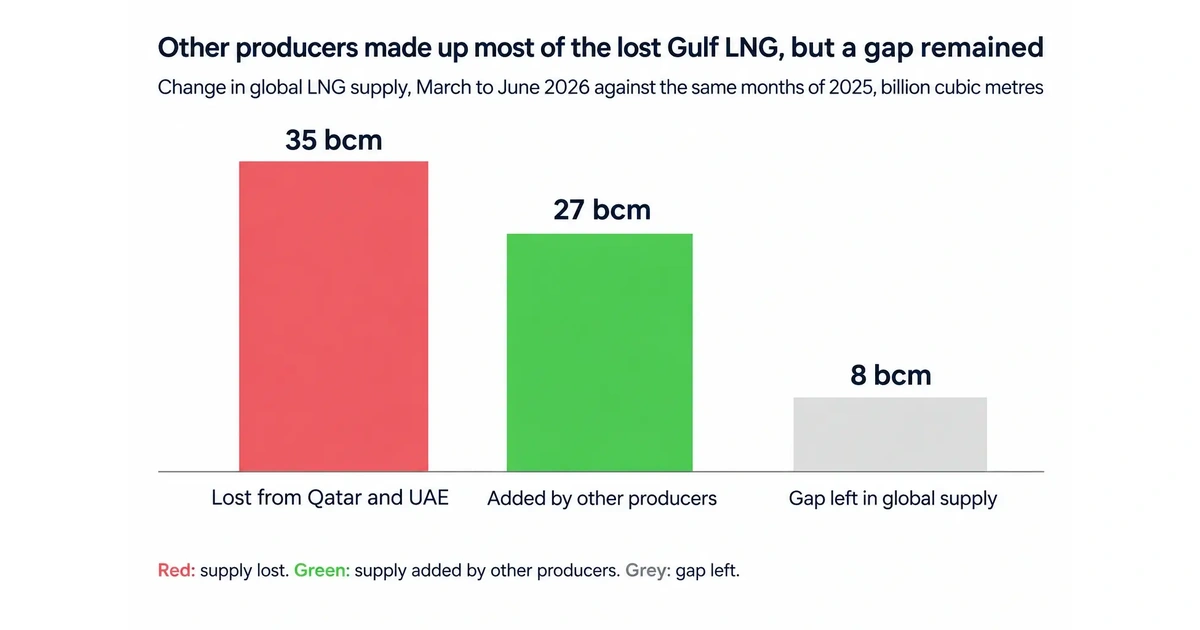
IEA, Gas Market Report Q3-2026 (executive summary), March to June 2026 against the same months of 2025
The gap will not close overnight. The IEA expects global gas markets to stay tighter than forecast through 2026 and 2027. Damage to Qatar’s facilities will take time to repair. Any further delay in Gulf exports could push global LNG supply into its first annual fall since 2012.
Energy fact ! The IEA estimates the conflict will remove 140 billion cubic metres of LNG supply between 2026 and 2030. That equals 15% of all the new LNG capacity due to come online in that period.
What Does it Mean For Your Business?
Rising wholesale gas and oil prices can increase electricity and gas costs for UK businesses. Unlike domestic customers, businesses are not covered by the Ofgem price cap, so commercial energy costs can vary with market conditions and contract terms. The impact can also extend beyond energy bills, as higher fuel and transport costs may increase supply chain expenses and other operating costs.
Keeping track of these changes can help businesses understand potential cost pressures and plan their budgets more effectively.
Planning Ahead
While businesses cannot control global energy prices, taking a few practical steps can help them prepare for changes and manage their energy costs more effectively.
Here are some points to consider:
- Check your contract end date. Reviewing your current agreement in advance can help you avoid unexpected costs. Ofgem explains that out-of-contract and deemed rates are usually more expensive than agreed contract rates.
- Review renewal information. Microbusinesses are entitled to receive clear information about renewal options before their current contract ends.
- Understand your contract options. Consider how different contract types may affect your energy costs, budget and exposure to market changes.
- Choose brokers carefully. Before agreeing to a contract through a broker, check the terms, fees and conditions. There is no cooling-off period once a business energy contract has been agreed.
- Contact your supplier early. If you have questions about your current agreement or upcoming renewal, speak to your energy supplier in advance to understand your options.
Businesses that plan ahead are best placed to weather the storm.
This page is general information and is not financial advice.