First impression matters in retail. A shop that catches the eye, feels inviting, and has a beautifully lit window display gives customers more reasons to step inside and stay a little longer. But behind those bright displays, cosy interiors and essential appliances lies an ongoing energy expense that can place extra pressure on your business budget.
The balancing act lies in creating a shop customers love to visit while keeping the cost of running it firmly in check.
But here is good news!
You do not have to overhaul your entire business to make a difference. Understanding business energy for retail shops can help you explore worthwhile savings, find the right business power supplier, and invest in improvements that benefit both your business and bottom line.
Why Does Energy Matter for Independent Retailers?
Energy is essential to keeping retail businesses running smoothly. Whether you are lighting your space, operating tills at the counter, keeping your premises cosy, or powering refrigeration equipment, energy is almost part of everything each day. However, the actual consumption depends on multiple factors, including business size, operating hours, the equipment in use, and business type.
Let us understand this with an example. A clothing boutique may use more energy for lighting and maintaining a comfortable indoor temperature, while a convenience store may have additional electricity demands from refrigerators and freezers. Understanding these differences is the first step towards managing energy costs for retail businesses more effectively.
Understanding Business Electricity and Gas
Electricity powers many of the essential activities in a retail business, including lighting, payment systems, computers, and other electrical equipment. Depending on the premises and installed systems, business electricity for retail shops may also cover electric heating, air conditioning, and refrigeration.
Gas can play an equally important role, particularly when it is used to heat the indoor space and provide hot water. This makes business gas for retail shops vital for large spaces or gas-powered systems.
Ultimately, your energy requirements come down to your business type and how you operate. While electricity alone may be enough for some retailers, others need both electricity and gas to keep their premises welcoming and their equipment operating reliably throughout the year.
What Makes Up Your Energy Bill?
Your business energy bill generally includes:
- Unit Rate: The price you pay for each kilowatt-hour (kWh) of electricity or gas consumed.
- Standing Charges: Daily charges for supplying energy to your premises; this covers the infrastructure and administrative costs to keep your business connected to the grid.
- Taxes and Levies: Applicable charges, which can include VAT, the Climate Change Levy, and Nuclear RAB Levy, depending on your business type and energy use.
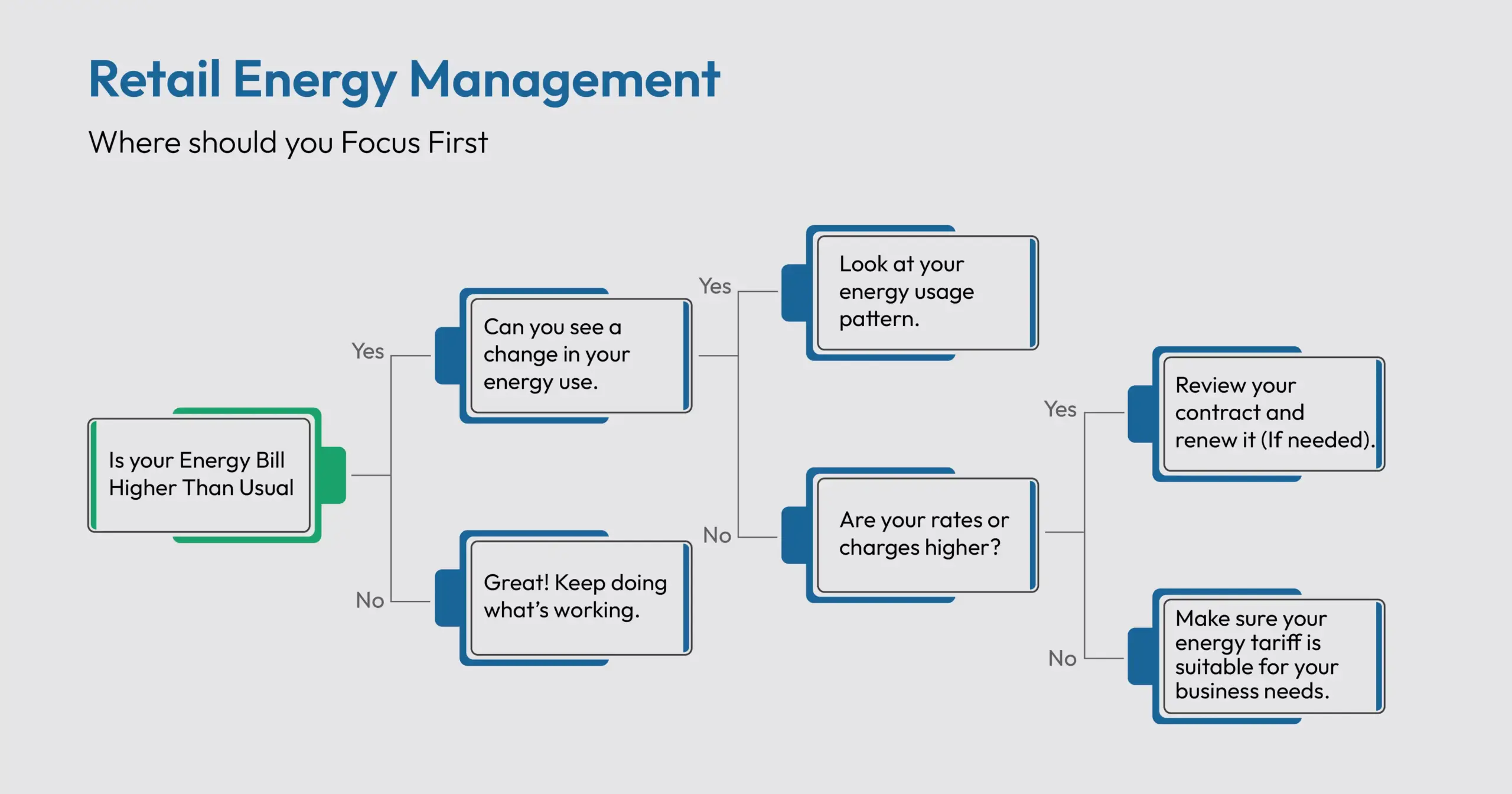
Familiarising yourself with these charges helps you distinguish between the cost of using energy and the charges associated with maintaining your supply.
Choosing the Right Business Energy Contract
Finding suitable commercial energy supplier for retailers involves more than comparing the headline price. Contract length, standing charges, renewal terms and any additional fees can all affect the overall cost of supplying your shop.
As per Ofgem’s business energy guidance, business contracts differ from domestic energy agreements, and the domestic energy price cap does not protect businesses.
Before agreeing to a contract, consider the following:
- Fixed-rate Contracts: These generally keep the agreed unit rates and standing charges fixed for the contract term, regardless of fluctuating wholesale market prices.
- Variable-rate Contracts: The energy price you pay may go up or down during the contract period, depending upon the wholesale energy market prices.
- Out-of-contract or Deemed Contracts: These contracts can apply in particular circumstances, such as when the agreed contract comes to an end or a business moves into new premises without arranging a contract. You will be put on rates which are usually higher than fixed-term rates.
Check your contract renewal date well in advance and compare the full terms of available options to find the right business energy supplier. If you work with an energy broker, ask how they are paid, whether commission is included, and whether any separate fees apply to stay on top of your energy management.
Practical Ways to Manage Retail Energy Costs
The reassuring part is that making your business more energy-efficient does not always require a big investment and major changes to your operations. A few practical changes to your daily routines can help you understand how to reduce energy bills in a shop while maintaining a welcoming environment for customers.
Monitor Your Energy Consumption
Review your bills regularly and compare usage across similar periods. If consumption rises unexpectedly, investigate possible causes such as longer opening hours, faulty equipment, heating settings, or changes in refrigeration demand. This energy audit can give you a clearer picture of where energy is wasted and help you identify areas of improvement.
A smart meter can take the guesswork out of managing your shop’s energy use, helping you see how much you consumed and make more informed decisions about saving energy. Installing smart meters for small businesses can help retailers monitor their energy consumption, identify usage patterns and make more informed decisions about energy efficiency.
Make Lighting Work Smarter
Good lighting can make your space welcoming while helping customers see products clearly and move around with ease. However, keeping the light on overnight or relying on inefficient bulbs can lead to higher electricity consumption.
Consider these energy saving tips for your retail shops:
- Replace suitable older bulbs with energy-efficient LEDs.
- Switch off lights in unoccupied stockrooms and staff areas.
- Use timers or occupancy sensors where appropriate.
- Make the most of natural daylight without compromising product displays.
Manage Heating and Cooling Carefully
Heating and air conditioning can contribute significantly to shop energy costs, particularly when doors open frequently or temperature controls are poorly managed.
Set heating and cooling schedules around your opening hours, check thermostat settings and avoid running heating and air conditioning simultaneously. Draught-proofing suitable gaps around doors and windows can also help retain warmth during colder months.
Remember that customer comfort matters. The aim is to avoid unnecessary energy use, not to make your shop uncomfortably hot or cold. Read our guide to saving energy during colder months for more practical tips.
Switch Off Equipment When Appropriate
Computers, printers, display screens and staff-room appliances can all contribute to electricity use. Establish a shop closing checklist so your team knows which equipment should be switched off and which systems must remain operational.
Do not switch off essential refrigeration, security systems, or other equipment that needs to run continuously. A clear, equipment-specific routine helps prevent waste without disrupting business operations and contributes to improved energy efficiency.
Get Your Team on Board
Your staff can be your biggest ally in using energy more efficiently. You might be surprised by how much difference everyday habits can make.
No lengthy training sessions are required to get started. A few friendly reminders to turn off unused equipment and a simple checklist can contribute to effective energy management.
Your Monthly Retail Energy Checklist
Managing retail electricity and retail gas becomes easier when regular energy checks become part of your everyday business routine.
Use this simple checklist to make a difference:
- Review electricity and gas bills for unexpected changes.
- Keep an eye on the contract end dates and renewal terms.
- Inspect lighting, heating and refrigeration controls.
- Review out-of-hours energy consumption where data is available.
- Ask staff to report draughts, faulty equipment or unnecessary energy use.
- Record improvements so you can assess whether they are making a difference.
These small steps help you maintain a clearer picture of your shop’s energy performance throughout the year.
Take Control of Your Shop’s Energy Costs
Managing business energy for retail shops does not have to mean making sweeping changes or sacrificing customer comfort. By understanding your contract, monitoring consumption, and handling access energy use, you can make more informed decisions about one of your business’s ongoing operating expenses.
MAKE ENERGY WORK FOR YOUR BUSINESS, NOT AGAINST YOUR MARGINS.