When was the last time you reviewed your energy bill and felt confident you are paying the right tariff? Most businesses only take a closer look at their energy bills when an unexpected rise appears on the bill. One common yet often overlooked reason is a deemed tariff.
Deemed tariffs are usually more expensive than standard tariffs. If left unchecked, they can significantly impact your business cash flow. Taking time to understand how you end up on a deemed tariff and how to avoid them can help you take control of your energy costs with confidence.
The good part is, it is simple to identify and even simpler to sort out.
What Exactly Is a Deemed Tariff?
A Deemed Tariff is a default energy tariff that applies when you start using electricity or gas without agreeing to a contract with your business energy supplier. Common reasons you might be put on a deemed contract include:
- You move into a premises and start using the energy still tied to the previous occupier’s name. This continues until you set up an energy account in your name and agree to a contract with the energy supplier of that premises or switch the supply to the other supplier.
Deemed tariff means paying at least 40-80% more compared to the negotiated tariff plan. So, they are definitely worth avoiding. Regularly review your energy plan and take control of your energy costs.
Why Are Deemed Tariffs Expensive?
Deemed energy tariffs are expensive because they are applied automatically when a property is occupied without a negotiated contract, such as after moving. Suppliers charge steep premiums, often 40-80% higher than fixed rates.
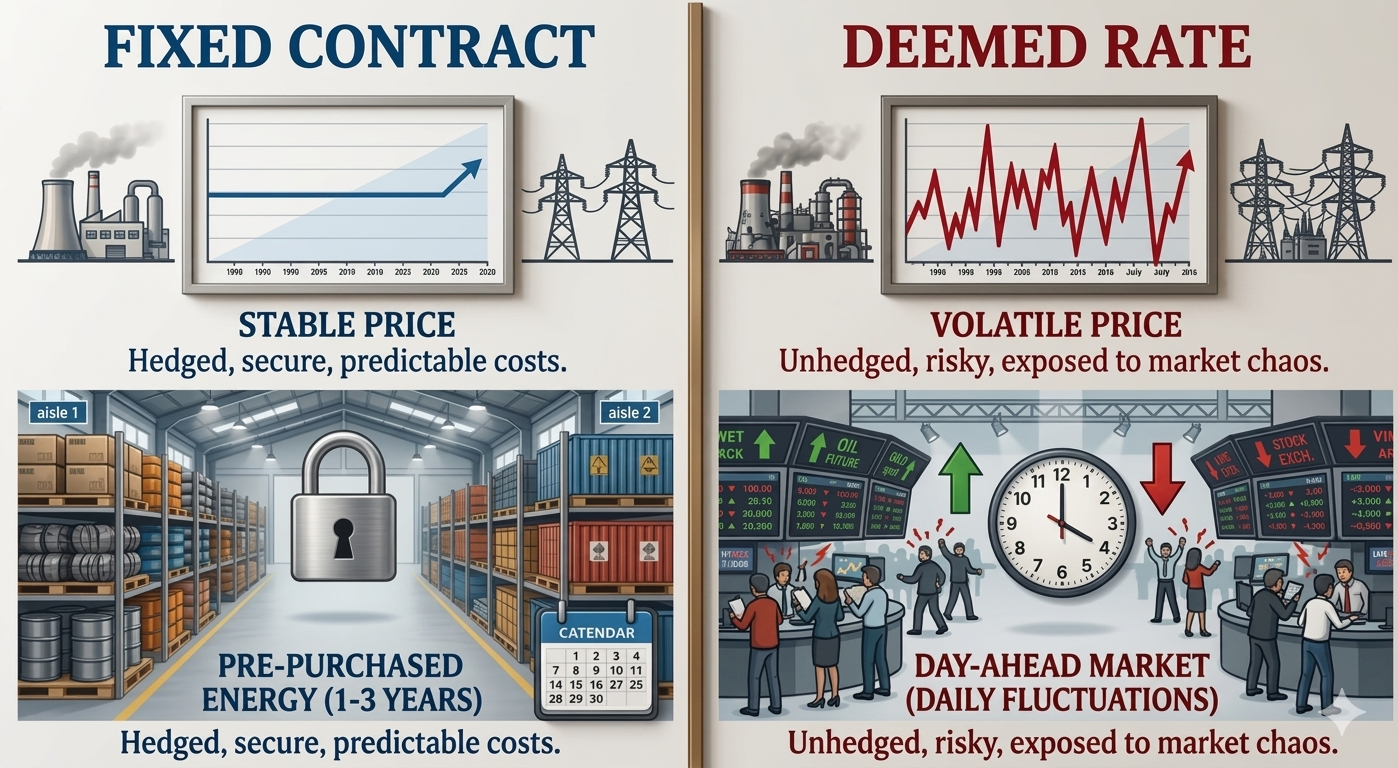
- High Risk Premium: Because you are not locked into a contract and can switch suppliers at any time, energy providers cannot secure or “hedge” your power in advance. They must purchase your energy on the volatile “day-ahead” market and pass that premium directly to you.
- The Danger: If the UK has a cold snap and gas plants fire up to meet demand, the wholesale price spikes. On a deemed rate, that spike is passed directly to you.
Quick Ways to Check If You Are on a Deemed Tariff
Not sure if you are on a deemed tariff? Do not worry. Here is how you can spot it:
- Check your “Contract End Date”, you likely don’t have one because you are on deemed rates.
- Take a look at the energy price per unit (kWh) and standing charges. If the charges feel double or triple compared to the standard tariff, it is a strong indication that you are on a deemed rate.
- See if you have started using energy when moving into new premises without a formal contract in place.
Energy suppliers usually let you know when you are on a deemed contract. If you have not received any information, get in touch with the energy supplier to confirm your contract type and terms.
How to Stay Off Deemed Rates?
Many businesses unknowingly pay higher due to a deemed tariff. One in ten micro-businesses is caught in these rates. It is important to take a closer look at your energy bills to avoid such rates.
Stay prepared before moving into a new space. Set up an energy account with your energy provider to start on the date you move in, and get the paperwork in place beforehand.
Keep an eye on your energy bills and monitor your energy usage to avoid costly surprises.