From the flicker of the first electric street lamp in 1888 to its progress towards a net-zero future, the UK’s energy journey is marked by milestones that often go unnoticed. Energy has always been a silent driver behind global progress, lighting homes and cities, powering industries, bridging nations, fueling transportation, and driving innovations across continents.
Despite being surrounded by energy every day, many of us rarely stop to think about how far we have come or ponder the pivotal moments that have shaped the way we generate and use energy. Often viewed as complex or far removed from daily life, the energy sector carries a history of surprising shifts and untold stories that continue to influence energy market trends.
Here are some surprising facts about energy, revealing innovation and lesser-known history behind the modern energy world.
Solar Power is not new, it has come a long way!
In 1982, the ‘Quiet Achiever’ became the first solar-powered electric vehicle to cross a continent, proving that solar power is not just a futuristic idea but a real force capable of crossing vast distances. It was a long day of scorching summer, when an Australian adventurer, Hans Tholstrup, along with a racing driver, Larry Perkins, drove over 4,000 kilometers from Perth to Sidney, marking a significant milestone in solar-powered green transportation. This car was build by Hans Tholstrup which completed the transcontinental journey by using solar energy, paving the way for a new era in clean transportation.
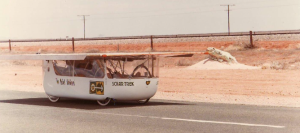
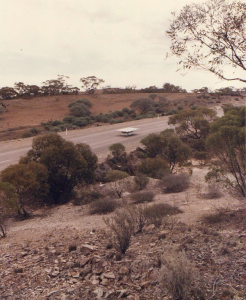
Image resource: Australian Rally History
Nuclear Power Got the Spark to Keep the Grids Alive
Nuclear power is one of the most overlooked energy sources of our time. Now seen in a more positive light, initially, it was public fear and controversy. While often portrayed as harmful and dangerous, this energy resource has quietly powered homes and industries for decades.
Back in the 1970s, nuclear power plants supplied 17% of electricity in the US, while a remarkable 30% in the UK, though Britain had access to abundant oil coming from the North Sea. What many might have forgotten is that nuclear power saved the Ohio Valley from the freeze of 1977, when extreme weather paralysed the coal supply under heavy snow. It was nuclear power that kept the grid alive and kept the lights on, silently proving its value in a real-world crisis.
| Did you know?
Today, the best energy suppliers aim to enhance inclusion of renewables in their energy mix – not as a headline, but as a dependable, low-carbon backbone supporting their reliability. |
Satellite Powered by Sun, Decades Later, It is Still Up There
Are you aware that the first solar-powered satellite is still orbiting the Earth?
Long before solar panels became popular on rooftops and electric vehicles, solar energy made its debut in outer space. To establishing that solar power can work beyond the atmosphere. Vanguard 1, the world’s first satellite powered by solar energy, was designed in 1958 to test the capabilities of a three-stage launch vehicles. The effect the environment has on the satellites and their systems in Earth orbit. This machine was also engineered to explore geodetic measurements through orbit analysis. Marking a critical step forward in space and energy innovation.
Though it was the second satellite launched by the U.S., but the first one to utilise solar power cells and also the first successful satellite of the Vanguard series. Even after all these years, this satellite is still up there. Orbiting the planet and silently reminding us of how long solar innovation has been part of our energy system.
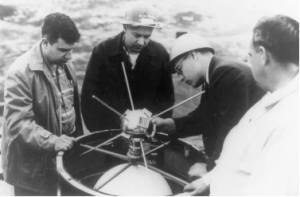
Image resource: Australian Rally History
Two Turns of Tidal Turbine Can Power a UK Home
Off the coast of Orkney in Scotland. A remarkable renewable energy innovation is making waves and reshaping our perspective about tidal energy.
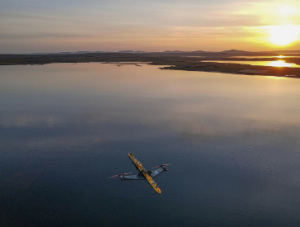
Are you familiar with the O2 tidal turbine, a floating giant as long as the Boeing 747. The first commercial turbine developed by Orbital Marine Power, a renewable energy company in the UK? The turbine is equipped with two massive motors that cover an area equal to one and a half professional basketball courts, unlike traditional turbines fixed to the seabed. O2 floats on the surface, anchored securely in place. Harnessing the full force of Orkney’s fierce tidal currents with greater efficiency and with more flexibility.
What is practically striking? Two turns of this tidal turbine can produce enough electricity to power a home in the UK for the entire day. With a generation capacity of up to 2 megawatts. This turbine can solely produce clean electricity enough for more than 2,000 homes each year. Marking that marine energy can remarkably contribute to the UK’s push for a green future.
Wind Energy will Lead the Path towards Greener Future
In 1980, something remarkable happened in the hills of New Hampshire. Making this state the birthplace of a quiet yet powerful energy revolution. This was the time when the world’s first wind farm began spinning its turbines and generating clean electricity. A crucial step forward in sustainability. Although traditional energy resources such as fossil fuels were dominant. The development of wind farms was a bold step in the transformation towards sustainability. Even now, the statistics confirm that wind energy is leading the journey towards net-zero.